
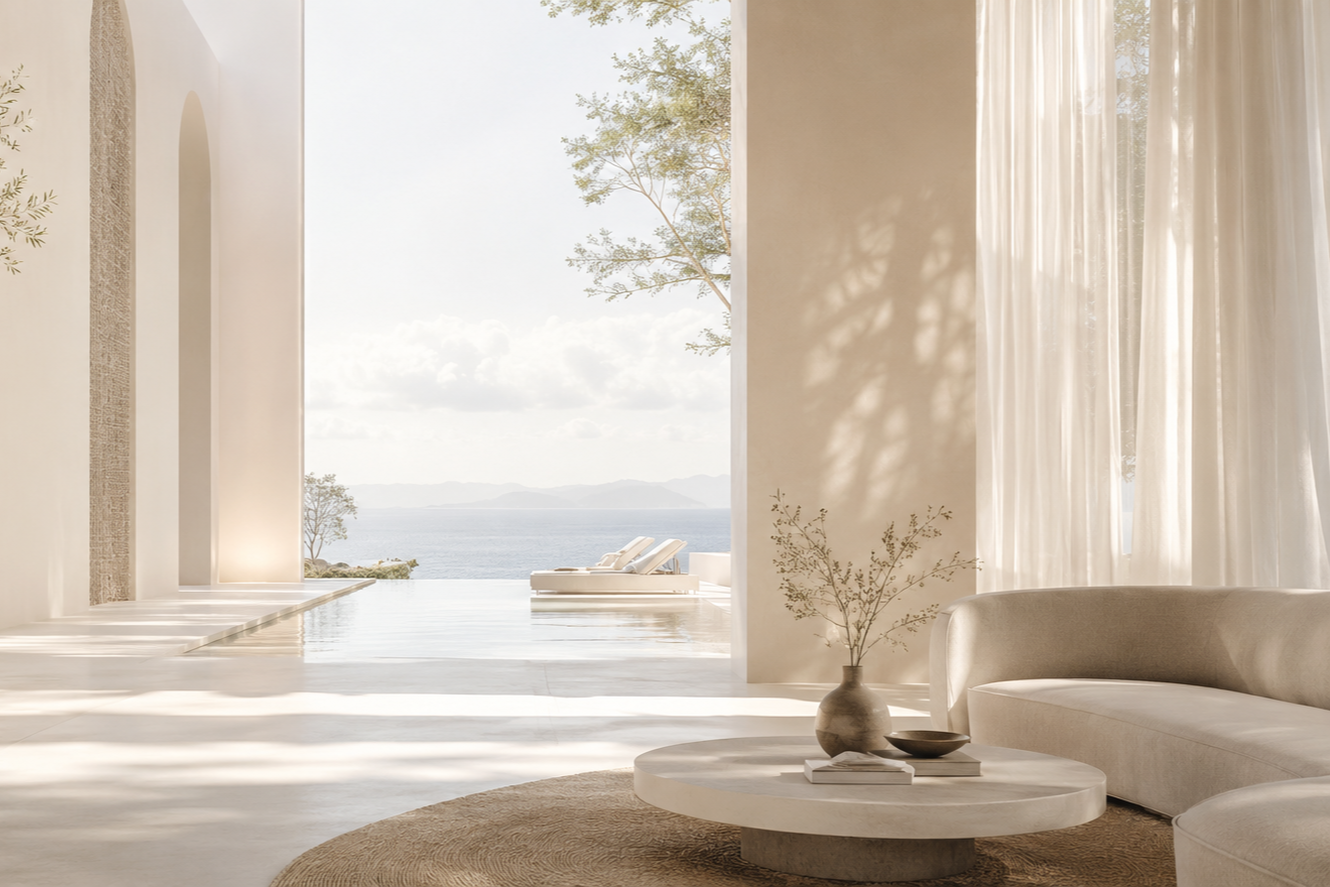
SENSES · STORIES · SPACES · SYSTEMS · STRATEGY
Worldbuilders across space, object, & experience.

Meet SÜJÄ
Süjä Studio is a cross-disciplinary design studio working across space, object, and experience.
We are worldbuilders — shaping environments, products, and moments that feel considered, coherent, and quietly alive.
Our name carries our makers. Su and ja — two perspectives, one sensibility.
We design the way we believe worlds should be built: attentive to feeling, grounded in story, and precise about the systems that hold everything together.
Sultan & Jade
Co-founders, Süjä Studio, United Arab Emirates
CO-FOUNDER, GERMANY
Brings an instinct for form, material, and space — the discipline that turns intent into vision and idea into presence — ensuring the client is always at the centre of it all.
With over ten years experience designing interiors for residential, commercial, retail and hospitality groups in Frankfurt and Dubai.
SULTAN
CO-FOUNDER, CCXP, NEW ZEALAND
Brings a background in product, experience and service design — shaping how people move through, feel within, and remember the worlds we make.
Over two decades of experience designing physical, digital and spatial customer experiences for leading retail, supermarket, and shopping mall groups in New Zealand and Dubai.
Jade
“
We believe, when moments are thoughtfully connected, they become something more human, more immersive, something that feels whole.
Nothing exists in isolation.

How WE DESIGN
Five lenses. One coherent world.
-
Designing for feeling.
Light, sound, material, and atmosphere. We design for the body first — the felt experience before the explained one — so a world is understood before it is described.
-
Designing for meaning.
Narrative and cultural resonance. Every world carries a story worth telling and worth belonging to — meaning is the thread that makes the whole thing hold.
-
Designing for context.
Movement, comfort, and place. We shape how people arrive, pause, and flow — reading context so a space knows what it is for and who it is for.
-
Designing for connection.
The invisible architecture beneath the surface. We connect touchpoints and operations so every part speaks to the others, and nothing is left in isolation.
-
Designing for direction.
Intent and coherence. The through-line that keeps a world true to itself as it grows — direction that turns a collection of parts into something whole.
Bringing the principles to life
through design.
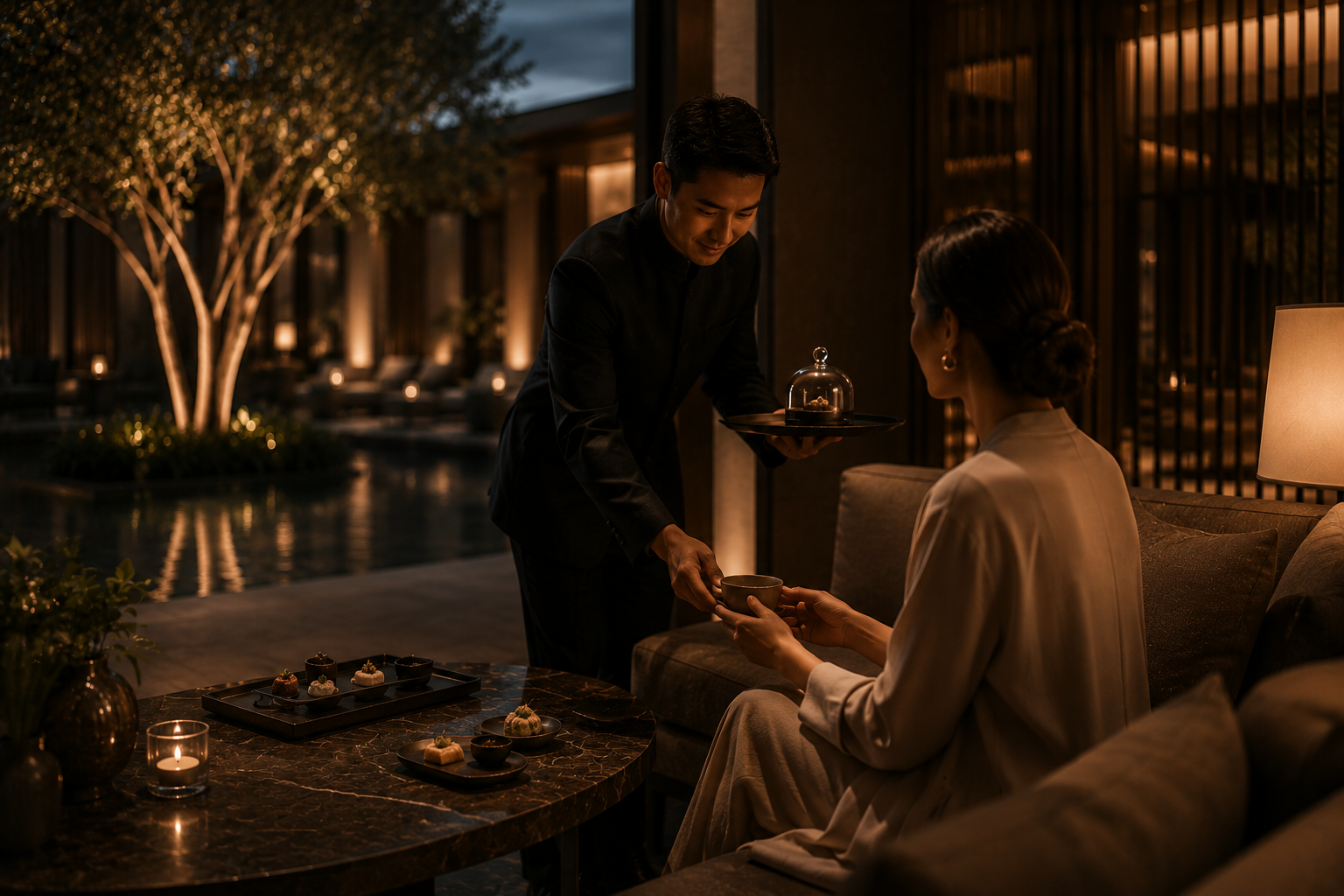
The best worlds don’t just serve.
They stay with people.